Understanding MCPs: From Concept to Practical Deployment for AI Agents (What are MCPs anyway? How do they differ from traditional servers? Walkthrough: Setting up your first MCP for an AI agent – common pitfalls & troubleshooting)
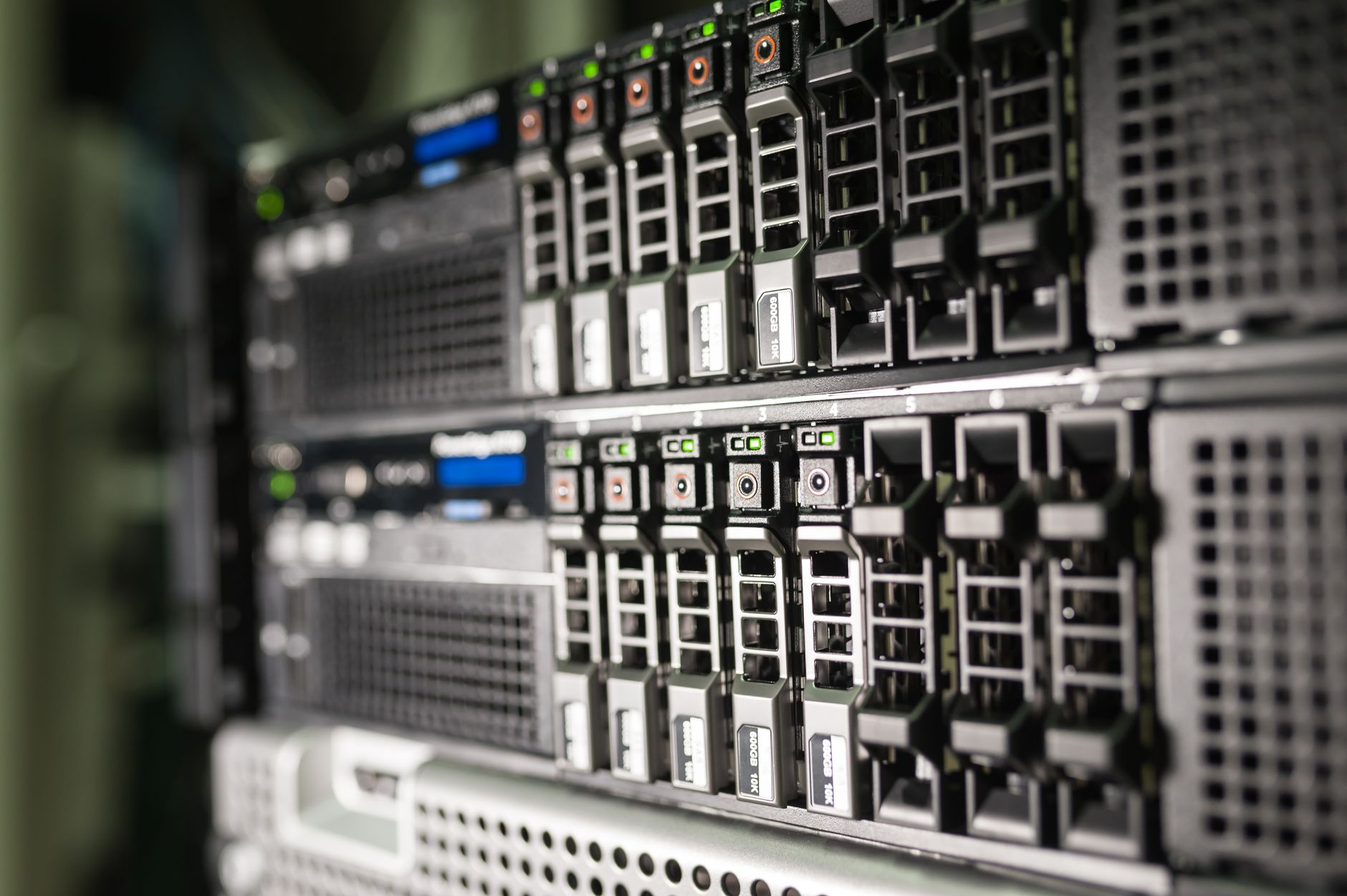
At its core, a Micro-Cloud Platform (MCP) for AI agents represents a paradigm shift from traditional server infrastructure. Imagine a highly distributed, modular computing environment specifically optimized for the unique demands of AI, rather than a monolithic server designed for general-purpose tasks. Unlike a traditional server, which typically hosts multiple applications on a single, powerful machine with shared resources, an MCP orchestrates a swarm of lightweight, interconnected micro-services. Each service, often containerized (e.g., Docker), handles a specific function of your AI agent – perhaps one for natural language processing, another for image recognition, and a third for decision-making. This granular approach allows for unparalleled scalability, resilience, and resource efficiency, as components can be independently deployed, updated, and scaled without impacting the entire system.
The fundamental difference between MCPs and traditional servers lies in their architectural philosophy and resource allocation. Traditional servers often lead to resource over-provisioning, where you buy more hardware than you consistently need to accommodate peak loads, leaving significant idle capacity. MCPs, by contrast, embrace a 'just-in-time' resource model. They leverage technologies like Kubernetes to dynamically allocate compute, memory, and storage to individual AI agent components as needed, often across a federation of smaller, commodity hardware units rather than a single enterprise-grade server. This not only significantly reduces operational costs but also enhances fault tolerance; if one micro-service fails, the MCP can swiftly spin up a replacement without bringing down the entire AI agent. Furthermore, the inherent isolation of services within an MCP offers superior security and simplifies dependency management, a common headache in complex AI deployments.
An SEO data API provides programmatic access to a wealth of search engine optimization information, allowing businesses and developers to gather, analyze, and integrate crucial SEO metrics directly into their applications and workflows. This powerful tool can automate data collection for keyword rankings, backlink profiles, competitor analysis, and technical SEO audits, streamlining the process of monitoring and improving search visibility.
Scaling AI with MCPs: Leveraging Their Power for Enterprise AI Agents (Why are MCPs ideal for scaling AI? Real-world use cases: How industry leaders are using MCPs for their AI agents. Q&A: Addressing your concerns about cost, complexity, and integration with existing infrastructure)
Multi-chip packages (MCPs) are emerging as a game-changer for scaling enterprise AI agents, primarily due to their ability to integrate diverse functionalities into a single, compact unit. This architectural advantage directly addresses the ballooning computational demands of modern AI models, particularly large language models (LLMs) and complex deep learning networks. By co-locating different chiplets—such as CPUs, GPUs, NPUs, and specialized memory—within the same package, MCPs drastically reduce inter-chip communication latency and power consumption. This efficiency gain is crucial for real-time inference and high-throughput training scenarios that enterprise AI agents require. Furthermore, the modularity of MCPs offers a significant advantage in terms of customization and future-proofing. Enterprises can select and integrate specific chiplets tailored to their unique AI workloads, optimizing performance and cost without being locked into monolithic, less flexible solutions. This flexibility is key for adapting to the rapidly evolving landscape of AI hardware and algorithms.
Industry leaders are already harnessing the power of MCPs to push the boundaries of their AI agents. For instance, companies in the autonomous vehicle sector are leveraging MCPs to miniaturize and accelerate the complex perception and decision-making systems required for self-driving cars. Here, MCPs enable the integration of high-performance vision processors, sensor fusion units, and control logic into a single, power-efficient module. Similarly, financial institutions are deploying MCP-powered AI agents for fraud detection and algorithmic trading, where ultra-low latency and massive parallel processing are paramount. The ability to tightly integrate custom AI accelerators with high-bandwidth memory within an MCP allows these systems to analyze vast datasets and execute complex models in milliseconds. The modular nature of MCPs also facilitates easier upgrades and modifications as AI models evolve, offering a path to sustainable innovation and competitive advantage.